
The Most Dangerous Promotion
The higher you rise, the easier it becomes to mistake confidence for sound reasoning.


By the time I reached my first senior-level role in a school district, I knew I had the experience, credentials, authority, and responsibility to make decisions that affected the lives of many students and teachers. Like many other professionals, I assumed that years of successful projects, moving from district to district, and earning promotions meant I was not only prepared but also a skilled thinker.
What I failed to recognize was that the higher I climbed in my career, the less honest feedback I received about the quality of my thinking. Increasingly, the people around me shied away from challenging my reasoning, and I stopped questioning my own judgment from time to time. After all, who wants to admit that maybe they’re not as good a thinker as they believe?
That type of disconnect creates a gap that many high-performing professionals eventually discover when the stakes are too high. What gap? The gap between sounding confident and reasoning accurately. Between the conclusions you reach and the evidence you have reviewed to produce them. Between the judgments you are paid to make and the judgments you can actually trust.
Unfortunately, these kinds of gaps lead to the most costly professional mistakes—not because of a lack of information—but because of the way we process the information we have. That realization in my own career is why I wrote the book Mastering the Mind.
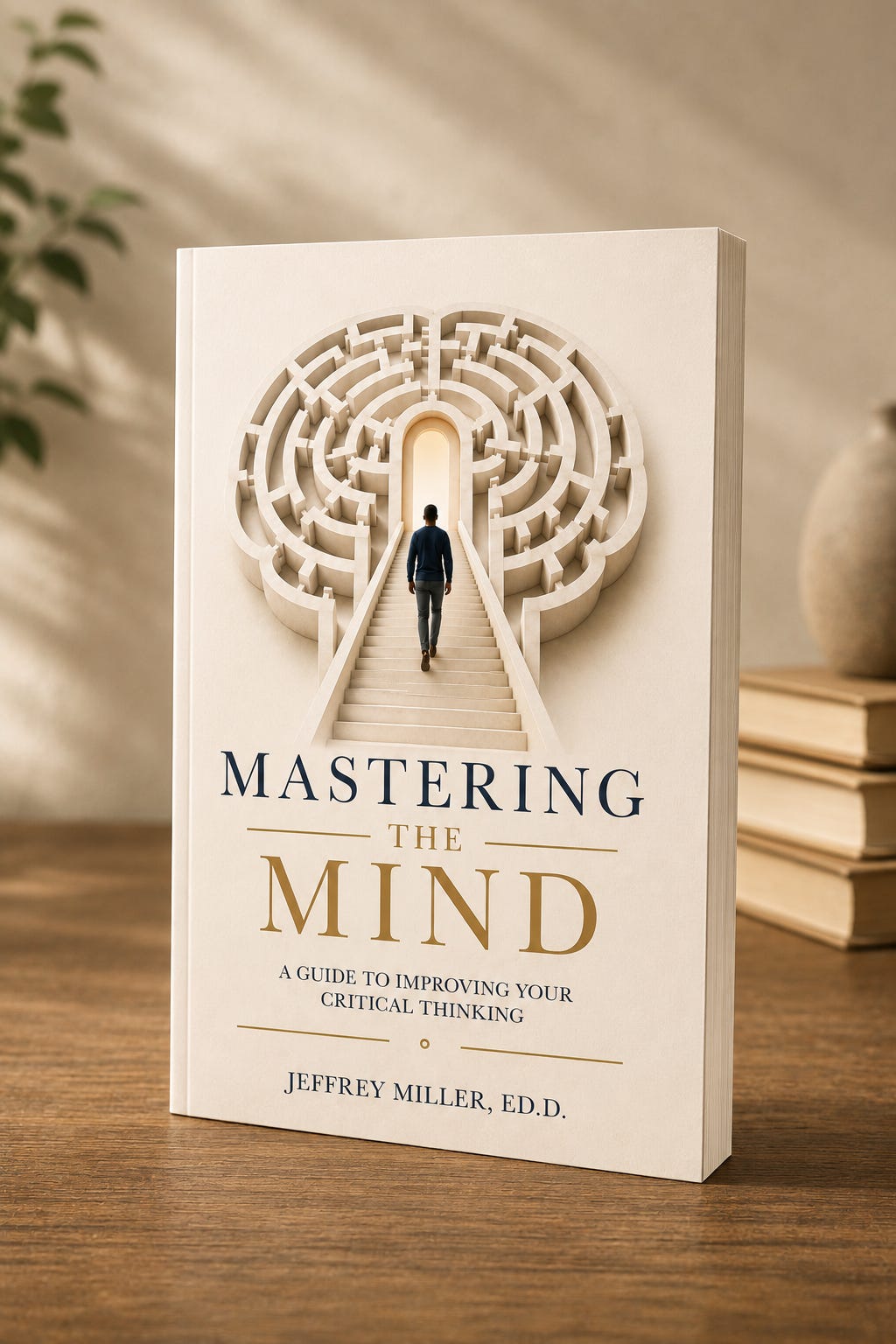
It isn’t a collection of cognitive biases or another productivity system. It doesn’t promise faster thinking or greater confidence.
Instead, it argues for something more difficult and, I believe, more valuable: slower, more disciplined reasoning that produces better judgment over time. The book explores what thinking actually is and develops three practical disciplines for improving it: asking better questions, writing to clarify your ideas, and speaking as a test of understanding.
This book isn’t for everyone. I realize that. If you’re convinced you’re a great thinker and there is no issue at all, you probably won’t find much value in it.
But if you’ve ever caught yourself wondering whether your confidence has outpaced your reasoning, this book was written for you.
This essay is adapted from Mastering the Mind: A Guide to Improving Your Critical Thinking, published today in paperback and for Kindle.
Mastering the Mind is available now in paperback and for Kindle.