

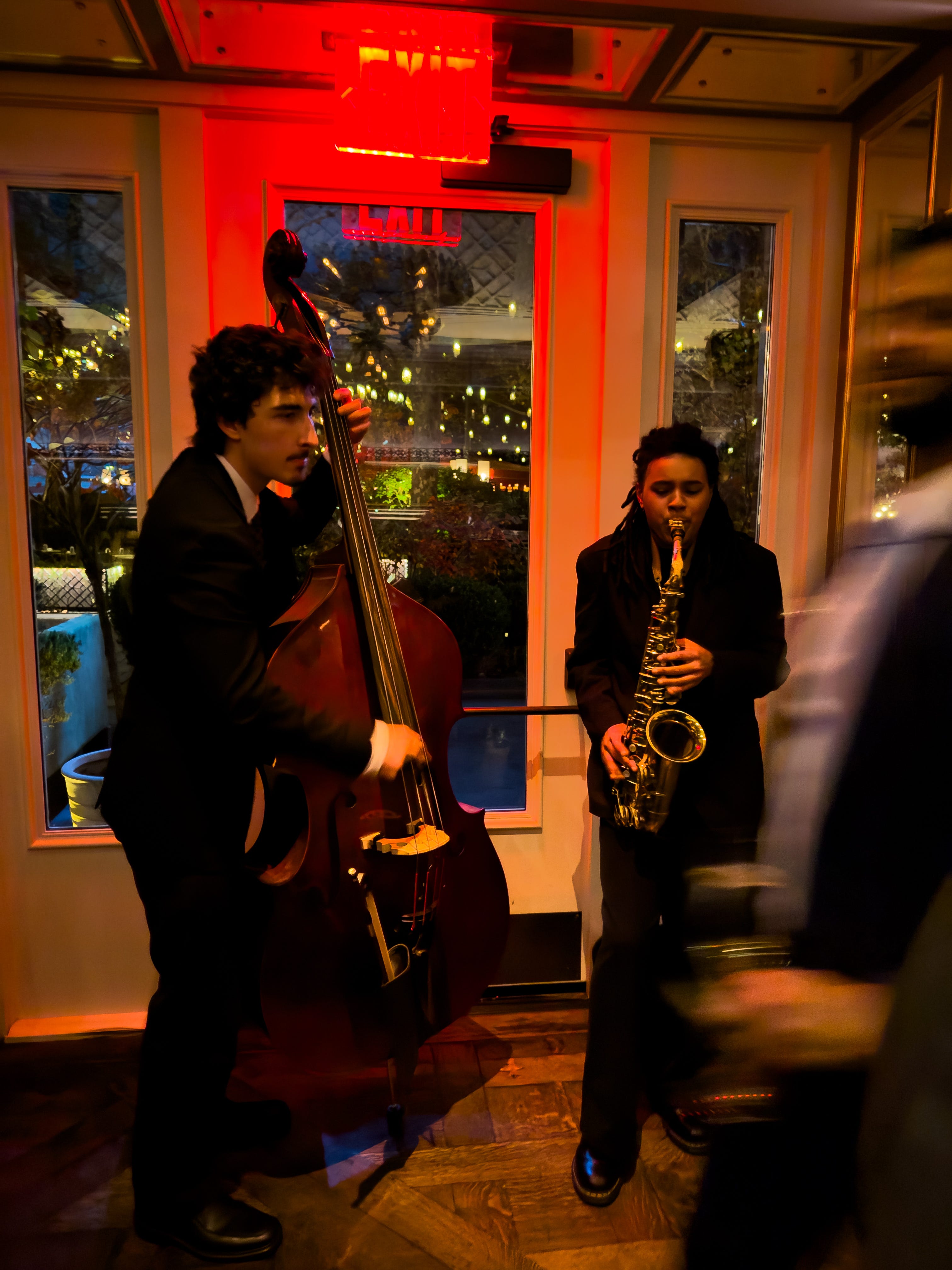
When was the last time you experienced true art? The question seems simple, almost casual, but I have come to believe it carries serious weight. What I want to argue here is not only that art has moved me, though it has, but that engaging with art has shaped how I reason. The way I notice, infer, and connect ideas was trained, in large part, by a lifetime of attending to expressive work.
Art as inheritance
For me, art arrived as relationship before it arrived as discipline. My parents are the reason. Some of my earliest memories are of my father sketching, a hobby he began in his youth and continued until his death. My mother made her own kind of investment, taking the time to bring me to plays and musicals. Like most people of my generation, I also grew up watching the Wizard of Oz every year when it aired on television, a ritual that made a story feel like something the whole family returned to together. During elementary school I had the privilege of learning the trombone from Allison Tucker, a well known Dallas jazz musician and music educator.
Each of these early introductions captured my attention and my heart. None of them felt like instruction at the time. They felt like belonging. That matters to what came later, because the empathy I would eventually learn to value in art was first something I experienced at home, in the company of people who loved it.
When art became a demand
It was not until high school that I developed a genuine appetite for poetry and jazz, and the reason was my beloved English teacher, Ms. Emejulu. She did more than expose me to the work. She challenged me to understand both forms and to find a way to express myself through them. That was the turning point. Art shifted from something I received to something I was asked to interpret, and interpretation is where thinking begins. I did not recognize it then, but she was teaching me to reason.
The drift
So what is the point of recalling all this? After a childhood and young adulthood full of exploring art and slowly curating an eye and an ear for expressive work, I found that I drew real inspiration and understanding from it. Then life from young adulthood into middle age filled itself with grinding, learning, and expanding my career, with very little room for art along the way. The exposure that once shaped me thinned out almost without my noticing. Only in stepping back to reflect on how much I valued art did I begin to see how much my thinking had depended on it.
Why art sharpens thinking
Across history, artists have served as keepers of memory and meaning. They turn lived experience into symbols, stories, and practices that people return to across generations. I do not have to reach far for an example. My father’s sketches were exactly that, a living record of how he saw and understood the world, left behind in graphite for the rest of us to read. Through visual art, music, dance, and storytelling, artists encode language, ritual, history, and value, and in doing so they preserve how a community makes sense of itself.
Art is also how I make sense of the world when ordinary language runs thin. It gives me forms to hold grief, joy, identity, understanding, and conflict when plain statements cannot carry the weight. And engaging with art lets me try on another person’s perspective, which I have come to see as a reasoning skill rather than only a tender one. To enter a viewpoint I do not hold, and to think from inside it, is the core of good analysis and the heart of good teaching. Two forms taught me this most directly, and they trained different muscles.
Jazz: thinking inside the form
When I learned the trombone under Allison Tucker, I assumed that mastery meant playing the right notes in the right order. However, jazz taught me something more demanding. A jazz musician works against a fixed structure, the chord changes and the time, and then has to make real choices inside it, listening to everyone else and responding before the next measure arrives. The form does not restrict the thinking. The form is what makes the thinking possible. You cannot improvise into empty space, only against something.
I did not have language for it then, but I was rehearsing a habit of mind that I rely on now. Good reasoning rarely happens with full information and unlimited time. It happens in motion, where you commit to a direction, listen for what the situation gives back, and adjust without abandoning the underlying structure. Jazz also taught me the value of restraint, the choice to leave space rather than fill every silence. The musicians I admired most were never the busiest. They were the ones who knew which note mattered and trusted the rest of the ensemble to carry the line.
Poetry: metaphor as a bridge between distant things
If jazz taught me to think under pressure, the poetry Ms. Emejulu placed in front of me taught me to think across distance. A metaphor asks you to hold two unlike things in mind at once and to find the hidden resemblance between them. That act is small on the page and large in the mind, because it is the same move that produces insight in almost any field. You understand one thing by way of another. You carry a pattern from a familiar domain into an novel one and discover that it fits.
What stayed with me was not any single poem—although there are a few that have made a lasting impression on me—but the practice of association itself. Metaphor trained me to resist the first literal reading and to ask what else a thing might be, what it resembles, what it borrows from. In my professional life that habit shows up as the ability to see a problem in one area through the frame of another, to notice that a question I am facing now rhymes with something I already understand. The connections feel new, but they are built from a skill I first practiced reading verse, learning that meaning often lives in the space between two ideas rather than inside either one alone.
Returning to the question
So I come back to where I began. When was the last time I experienced true art? For too long the honest answer was that I could not remember, and reflecting on that absence has shown me what I gave up without meaning to. True art, I now understand, is not decoration around the edges of a serious life. It is one of the instruments by which I learned to think, to hold ambiguity, to reason in motion, and to build bridges between distant ideas. Returning to it is not a luxury I am owed at the end of a long stretch of work. It is a way of keeping my mind in good condition. The next time someone asks me that question, I intend to have a recent answer.
Want to support without a paid subscription? Make a one-time donation below.