

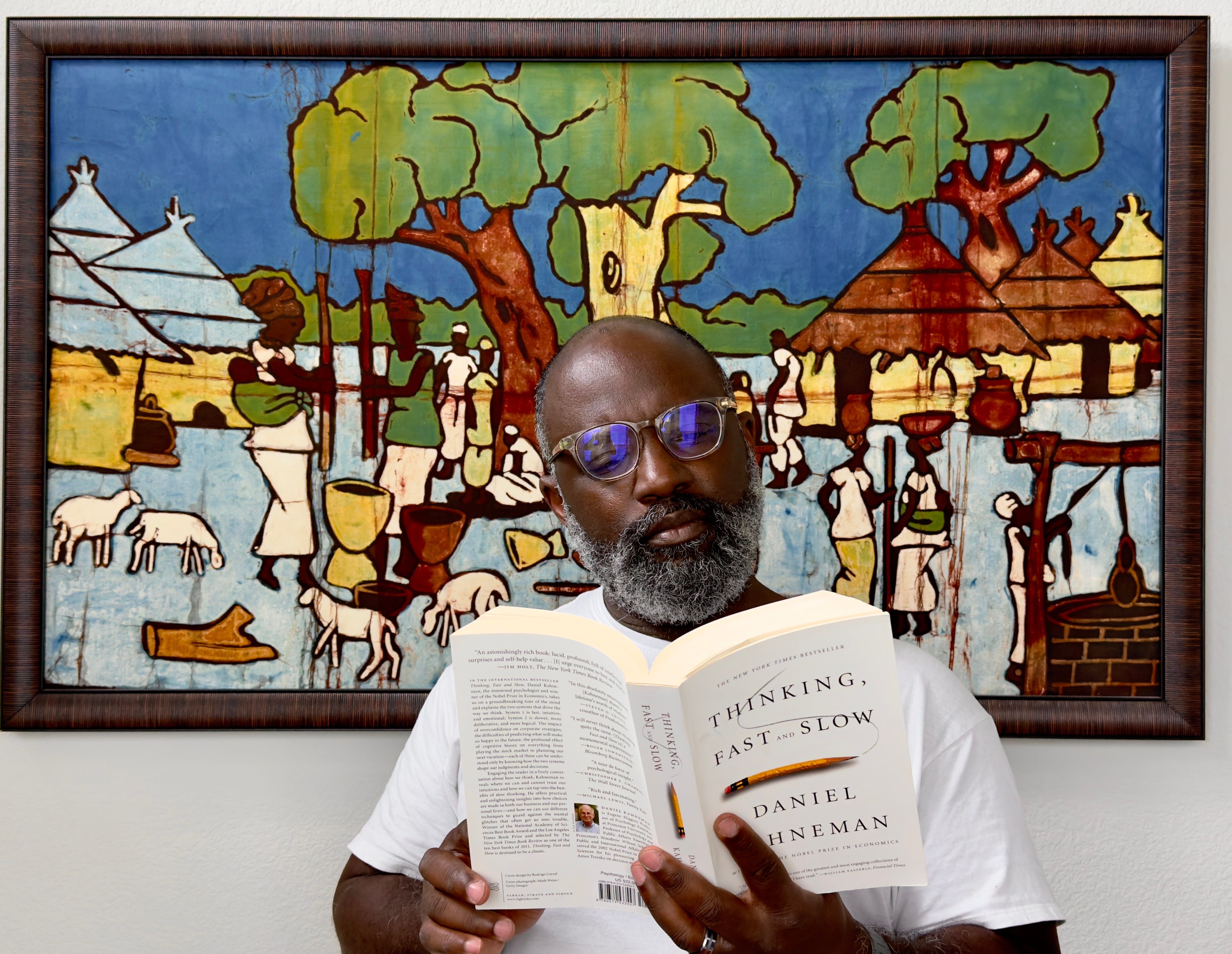
There is a version of the “reading-is-good” argument that almost everyone finds easy to accept and nearly impossible to act on. Read more. Think better. It sounds right and feels true. And it changes almost nothing, because it misidentifies the dilemma.
The issue is not that people have stopped valuing reading. It is that most people have quietly replaced reading with a functional substitute that feels similar but operates differently. Scrolling through a long article, watching an explainer video, listening to a summary podcast — these are all information delivery systems that many of us have adopted. What they are not is thinking practice. Reading, when done at depth, is not primarily about acquiring information. It is about sustaining a line of reasoning long enough to evaluate it. That distinction is worth sitting with.
The Demands a Text Makes
When I trace the intellectual threads that have most shaped how I think, not what I know, but how I reason, they almost always originate in a text that made demands on me. Reading Heather MacDonald’s The Diversity Delusion was not simply an encounter with a critique of identity-driven politics in higher education. It disrupted a frame I had not known I was carrying. The disruption was not in the content alone. It was in what the text required: I had to hold the argument that modern academic culture systematically trades shared standards for ideological conformity, sit with the discomfort of finding parts of it persuasive, and resist the reflex to dismiss what I could not immediately refute. The value was not in where I landed. It was in the cognitive work the text demanded before I got there.
Most mainstream information formats are designed to minimize that friction and reading at depth is almost alone in requiring it. This is where the reading-thinking relationship becomes analytically interesting. Reading does not improve thinking by providing more material for thought. Rather, it improves thinking by structuring how thought moves. A well-constructed argument in long-form prose shows you what it looks like to build a claim, test it against an objection, qualify it with precision, and arrive at a conclusion that earns its authority. You are not just absorbing the argument. You are, at some level, inhabiting the cognitive process that produced it. This is why the medium matters. A bullet-pointed summary of the same argument strips out exactly the elements that make the original instructive. The finished claim remains. The reasoning that produced it disappears.
Curiosity is often cited as the engine of intellectual growth, and it is — but curiosity without a discipline for following ideas to their depth tends to produce broad familiarity and shallow understanding. Reading is one of the few habits that converts curiosity into something more durable: the capacity to think a problem all the way through.
You Write What you Read
Consider the reading-writing connection from this angle. Writing that goes anywhere, that actually develops a line of thought rather than restating one, almost always depends on prior reading that went somewhere. Not because reading provides content to cite, but because sustained reading builds the internal model of what a developed argument feels like. Writers who have read deeply carry that architecture in their cognitive memory. They know what a thought looks like when it is finished, because they have followed enough thoughts to their conclusions.
The inverse is equally visible. Writers who have consumed information primarily through short-form aggregation tend to produce writing that lists well and argues poorly. The claims are present, but the structure that would make them persuasive is absent. This type of writing is not a failure of intelligence. Rather, it is a failure of cognitive modeling and reading is where that modeling happens. None of this is an argument for reading classical literature specifically, or for volume as a metric, or for any particular genre hierarchy. Those conversations tend to generate more anxiety than insight. My argument is simpler and more portable than that: whatever you read, read at the level that requires you to think. This requires you to choose texts that make you slow down. It means reading arguments you initially disagree with long enough to understand why someone who is not foolish would hold them. It also means pausing when something does not resolve easily, rather than moving past it.
Reading as intellectual discipline is not about the content consumed. It is about the cognitive posture maintained while consuming it. The question to carry into any reading practice is not what am I learning but what is this asking me to think through.
Consuming Information Displaces Thinking
Making the shift from reading as information intake to reading as thinking practice is one that compounds over time. The difference between people who read at depth and people who consume at volume becomes legible in how they reason, how they write, and how they navigate problems that do not have obvious answers. The capacity to think well under uncertainty is not a personality trait. It is a practiced skill. Reading, done seriously and with the right content, becomes one of the primary sites where that skill gets built.
The substitution is not neutral. When consuming information displaces thinking practice over time, the loss does not announce itself. It shows up gradually, in the quality of judgment, in the flatness of written argument, in the difficulty of holding a complex problem long enough to actually move through it. Most people notice the symptoms without identifying the cause. The cause is usually upstream, in a reading habit that quietly became a consumption habit without the transition ever feeling like a decision.
Want to support without a paid subscription? Make a one-time donation below.